1075 Harrison City Export Rd # 3, Jeannette, PA 15644


If you’re dealing with missing teeth or facing tooth replacement options, you may be overwhelmed by the myriad choices available. Understanding the differences between dental implants and bridges is crucial to making an informed decision that aligns with your dental health goals. In this blog post, we’ll explore the pros and cons of each option, helping you gain insight into the unique benefits they offer. By the end, you’ll be equipped with the knowledge to confidently choose the best solution for your dental health needs, ensuring a bright and healthy smile for years to come.
Understanding Dental Implants
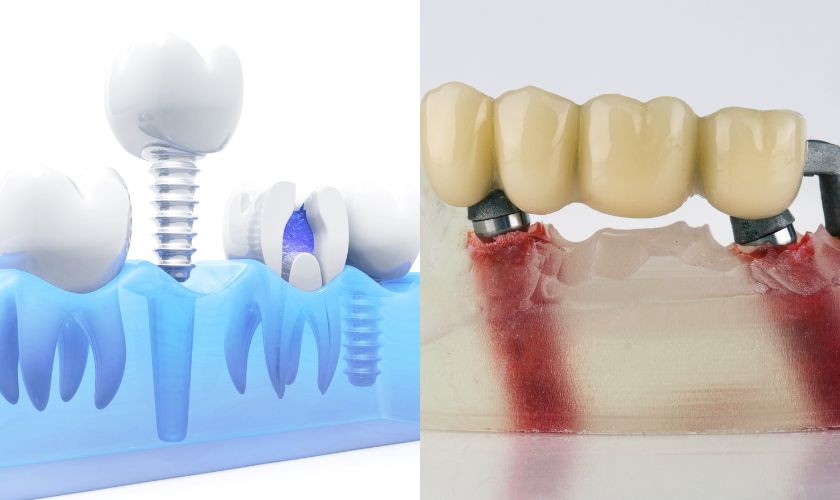
Dental implants are one of the most advanced and durable solutions for replacing missing teeth. They consist of three main components: the titanium implant post, the abutment, and the prosthetic crown.
The implant post is surgically inserted into the jawbone, providing a sturdy foundation for the crown that mimics the natural tooth. Dental implants in Penn Township, PA, offer several advantages:
- Stability and Longevity: Due to their integration with the jawbone, dental implants provide exceptional stability, function, and longevity. Proper care can last a lifetime, making them a cost-effective solution in the long run.
- Preservation of Jawbone Health: Implants stimulate the jawbone, preventing bone loss that often occurs with missing teeth. It helps maintain the integrity of your facial structure and prevents a sunken appearance, which can happen over time with other tooth replacement options.
- Natural Appearance and Function: Dental implants look, feel, and function like natural teeth. They blend seamlessly with your existing teeth, giving you the confidence to smile, eat, and speak without any concerns.
Exploring Dental Bridges
Dental bridges are another popular option for replacing missing teeth. They consist of one or more artificial teeth (pontics) held in place by crowns attached to the adjacent natural teeth or dental implants. Let’s delve into the benefits and considerations of dental bridges:
- Non-Invasive Procedure: Unlike dental implants that require surgery, dental bridges are a non-invasive dental procedure. The process involves preparing the adjacent teeth for crowns, which will serve as anchors for the bridge.
- Quick Restoration: Dental bridges can be completed relatively quickly compared to dental implants, which may require several months for the implant post to integrate fully.
- Cost-Effective Option: For some patients, dental bridges may be a more budget-friendly choice compared to dental implants, especially if multiple teeth need replacement.
Dental Implants vs. Bridges: Making the Right Choice
- Candidacy: Both dental implants and bridges have specific candidacy criteria. Dental implants in Penn Township, PA, require sufficient jawbone density and healthy gums for successful placement, while bridges depend on the strength and health of adjacent teeth. Consulting with a dentist in Penn Township, PA, will help determine which option suits you.
- Long-Term Considerations: While dental bridges are a good option for some patients, they may not prevent bone loss like dental implants. Dental implants are often the better choice for individuals looking for a permanent and bone-preserving solution.
- Maintenance: Dental implants are low-maintenance and can be cared for like natural teeth. Dental bridges, on the other hand, may require extra attention to cleaning under the artificial teeth and around the crowns.
Choosing between dental implants and bridges ultimately boils down to what works best for your dental situation and personal preferences. Both options have their merits, offering effective solutions for replacing missing teeth and restoring your smile’s aesthetics and functionality. Dental implants offer unparalleled longevity, jawbone preservation, and a natural look and feel, making them a fantastic long-term investment in oral health.
On the other hand, dental bridges can be a more budget-friendly and less invasive option, providing satisfactory results for those who prioritize a quicker fix. To make the best decision, it’s essential to consult a qualified dentist who can assess your oral health and recommend the most suitable option. Remember, a healthy smile contributes not only to your overall well-being but also to your confidence and quality of life. So, invest in your dental health wisely and embark on a journey to a brighter, healthier smile!